Post
Website Design That Converts: 4 Essential Tips for Success
Your website looks good, but is it bringing you customers?
Website design that converts does more than attract attention. It helps visitors understand your business, find the information they need and take the next step towards making an enquiry or becoming a customer.
For B2B businesses, where purchasing decisions often involve careful research, a website can play an important role in building confidence. Potential clients may visit several times, compare providers and share information with colleagues before contacting you.
Your website should make that process straightforward.
Is your website making it easy for customers to enquire? Talk to LJC Marketing about a website that clearly presents your services and helps visitors take the next step
Table of Contents
A Good Website Needs More Than Great Design
Imagine visiting a company’s website to enquire about its services, only to encounter confusing navigation, slow-loading pages and unclear information.
Would you stay or look elsewhere?
Your potential customers face the same decisions. An attractive homepage may encourage them to explore, but they still need clear answers: What does this business offer? Is it suitable for my needs? How do I get in touch?
An effective business website combines a professional appearance with useful content and straightforward functionality. It should also work comfortably on different screen sizes, with readable text, accessible menus and forms that are easy to complete.
Website design that converts brings these elements together, helping visitors move from initial interest to a clear next step.
“Explore our website design and development services for help improving your business website.
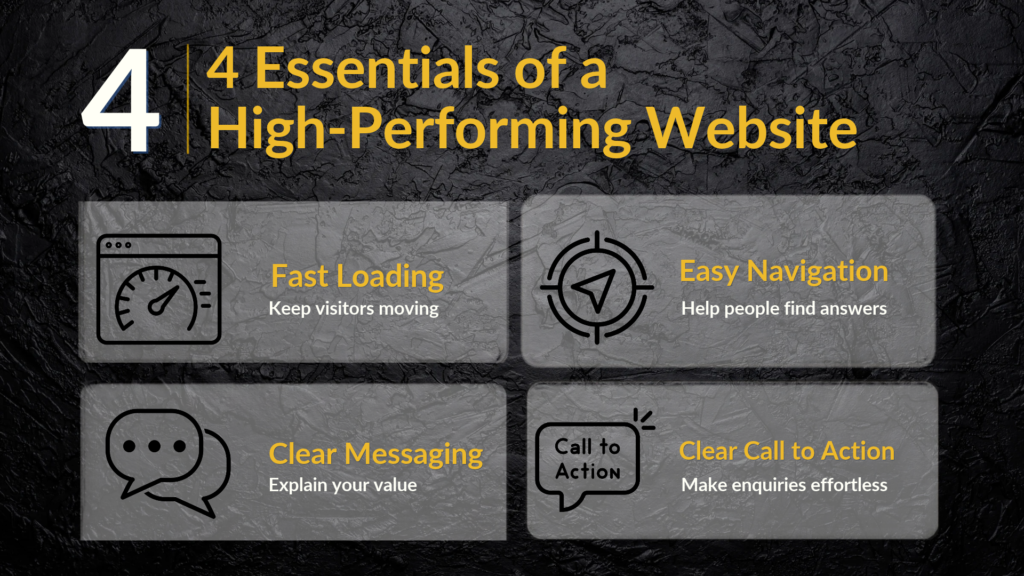
4 Essential Elements of Website Design That Converts
AImproving your website starts with removing obstacles between visitors and the information or action they need.
These four elements provide a practical starting point.
1. Fast Loading Speed
Visitors should be able to access your content without unnecessary delays. Large images, unnecessary features and technical problems can make pages slower to load or respond.
Start by checking your homepage and key service pages on both a mobile phone and a desktop computer. Look for images that take too long to appear, buttons that respond slowly and layouts that move while you are trying to read.
You can also use Google PageSpeed Insights to assess a page’s performance on mobile and desktop and identify opportunities for improvement.
Treat the results as a starting point for investigation. A technical score alone does not tell you whether visitors understand your services or become customers.
2. Simple Navigation
Clear navigation helps potential customers find relevant information without guessing where to click.
Use familiar menu labels such as Services, About and Contact. Give pages descriptive names and keep important information within easy reach.
If several services appear on one page, make the expandable sections easy to identify and operate. Visitors should understand what each service involves and how to enquire about it.
Try a simple test: ask someone unfamiliar with your website to find a particular service and your contact details. Watch where they hesitate. Their experience may reveal confusing labels or missing information that your team no longer notices.
3. Clear Messaging
Your website should explain what you offer, who you help and why your services are relevant to them.
A visitor should not have to work through several paragraphs of vague language to understand your business. Lead with a clear statement of what you do, then explain the problems you help customers address.
Support your message with relevant examples, genuine testimonials or case studies where available. These should help visitors assess your experience rather than make promises you cannot substantiate.
Keep your tone and visual identity consistent across the website. Familiar colours, typography and messaging help each page feel part of the same business.
4. Clear Call to Action
Once visitors understand your offer, make the next step clear.
A call to action might invite them to request a quote, discuss a project or submit an enquiry. Choose wording that accurately describes what happens after they click.
For example, “Request a Website Quote” gives more context than a generic “Click Here”.
Keep contact forms focused on the information your team needs to respond. Check that labels and instructions are clear, required fields are identified and a confirmation appears after submission.
Test the complete journey yourself, including on mobile. Make sure the form works and the enquiry reaches the right person.
How to Check Whether Your Website Is Working
Website design that converts needs ongoing review. Once you have improved the visitor experience, check whether it supports your business goals.
Start by defining the actions that matter, such as completed enquiry forms, consultation bookings or quote requests.
Where you use analytics, distinguish completed actions from button clicks. Someone clicking a contact button has shown interest, but that does not necessarily mean they submitted an enquiry.
Review the quality of enquiries alongside the numbers. Are people asking about services you provide? Do they understand your offering? Are the enquiries reaching your team reliably?
Use these observations to guide further improvements rather than changing everything at once.
Is Your Website Helping Your Business Grow?
Website design that converts starts with understanding what your potential customers need and making it easy for them to act.
If visitors struggle to navigate your pages, understand your services or contact your team, you could be missing valuable opportunities.
At LJC Marketing, we design and develop websites that combine professional aesthetics with practical functionality.
From clear layouts and consistent messaging to responsive design and straightforward enquiry journeys, our approach focuses on helping businesses create better online experiences.
Your website should look professional and support your business goals.
“Ready to discuss website design that converts visitors into enquiries?”